Marshalling causal evidence at scale for Contribution Analysis and beyond.#
Causal Mapping is not primarily an evaluation method; it is a way of identifying and organising causal claims in support of evaluative judgement.
- It fits naturally with Contribution Analysis (CA), while still adding value to other evidence-based frameworks...
- Outcome Harvesting: strengthen contribution claims by identifying the precise causal chain from outcome back to intervention.
- Realist Evaluation: identify Context-Mechanism-Outcome (CMO) linkages mentioned by sources.
- QuIP: strengthen causal contribution claims through explicit, source-grounded chains.
1 Link = 100 Claims
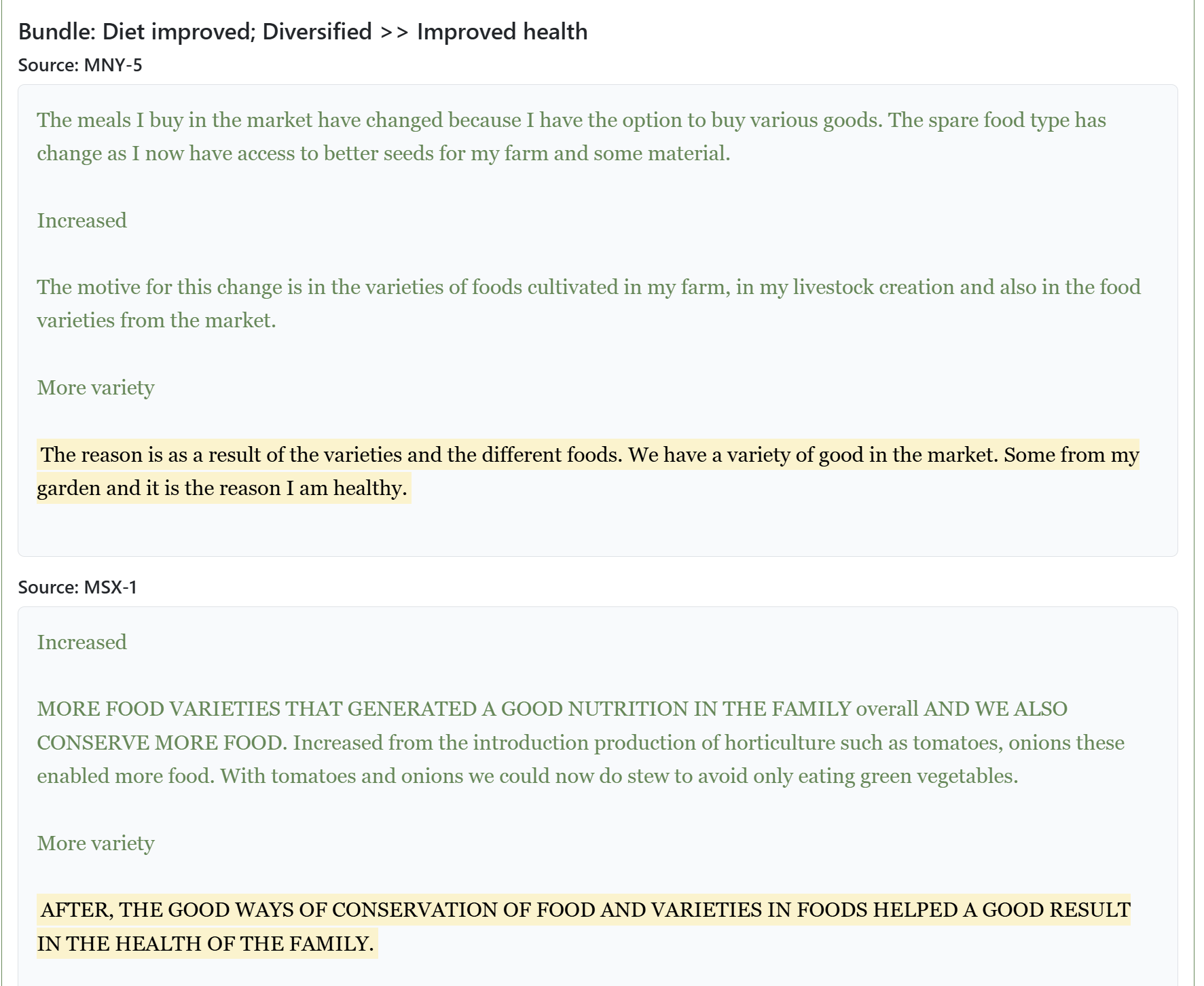
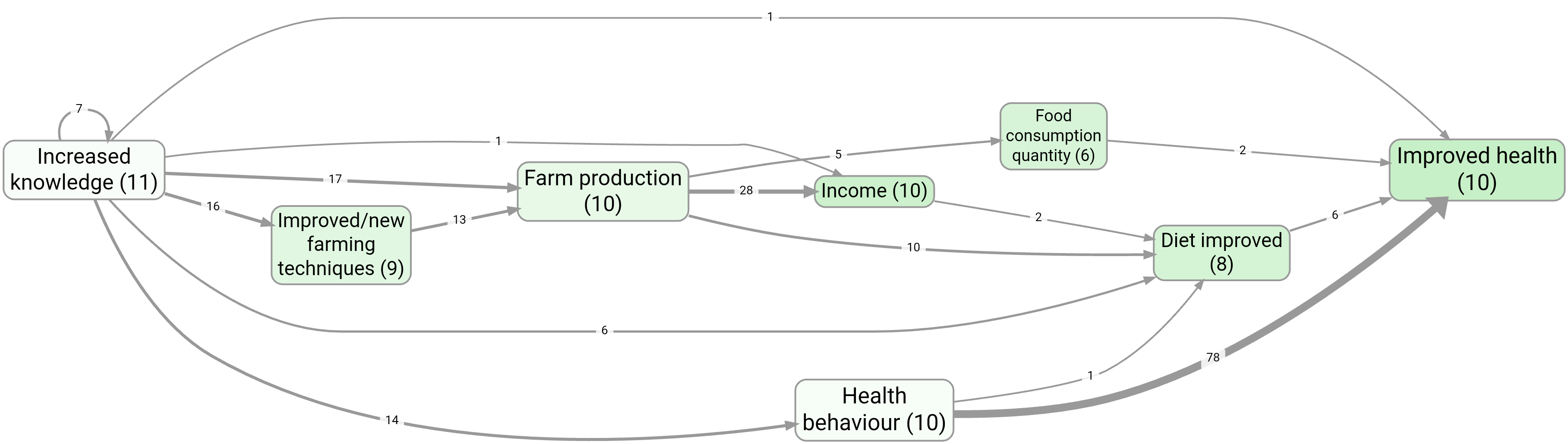
An arrow in a map can look simple (for example, Training -> Knowledge), but that single link can represent dozens or hundreds of auditable claims from different sources.
- It lets evaluators “double-click” on it and examine the different quotes behind each link as well as how often it was mentioned.
- Every claim has verbatim text attached to it.
Scaling analysis with AI
When you move from 10 interviews to 200, manual coding alone is too hard. "Asking ChatGPT" surrenders human judgement to a black box: we don't really know how it reached its conclusions.
Causal Mapping uses AI as a low-level assistant to automate the extraction of traceable causal claims according to strict rules, leaving evaluative judgements to the evaluator.
How causal mapping can help with Contribution Analysis#
John Mayne's six Steps, plus one#
1 Set out the Attribution Problem
Define the evaluation questions and the level of evidence required.
2 Develop the Theory of Change
Establish the logic of how the intervention is expected to lead to results.
Often there are multiple versions of the "official" theory, or none at all.
Causal mapping helps: Assemble theories of change from official documents.
3 Gather Evidence on the ToC
Collect existing and new evidence to populate the causal links.
Causal mapping helps: Assemble "empirical theories of change" from stakeholder evidence and test if the official theory matches up. There is even a metric for that.
4 Assemble the Performance Story
Build the contribution narrative based on synthesised evidence.
Causal mapping helps: Synthesises individual claims into verifiable chains with path tracing and source tracing.
5 Assess Alternative Explanations
Account for external influences and other drivers of observed change.
Causal mapping helps: Explicitly maps non-project influences mentioned by sources.
6 Revise and Strengthen
Refine the story based on gaps identified in the evidence base.
Causal mapping helps: Highlights weak links where evidence count is low.
7 Extend
Causal mapping helps: A single causal coding of all documents creates a causal database which can provide inputs to all the above steps, and a lot more too.
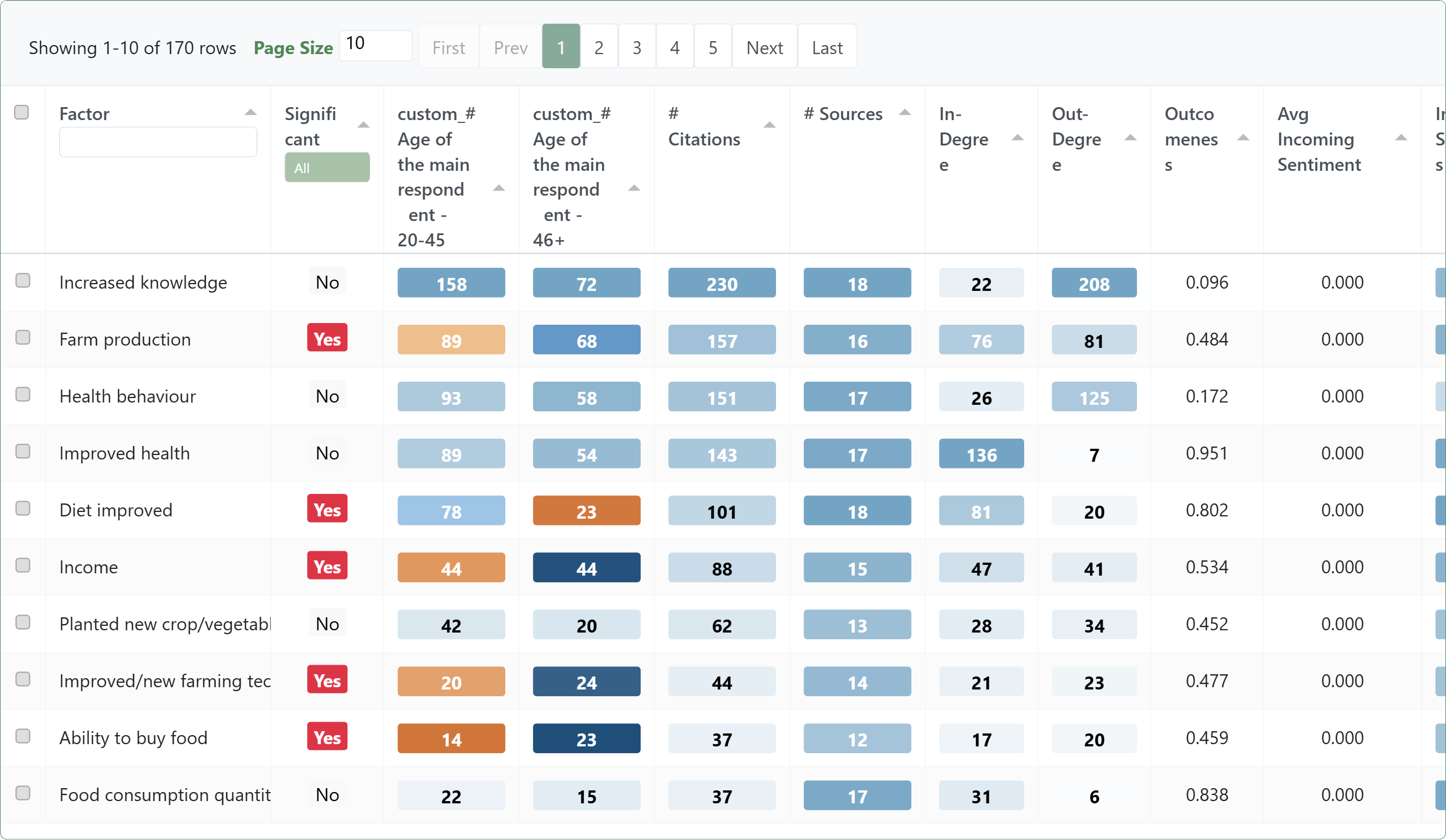
See how different stakeholder groups view the project differently.
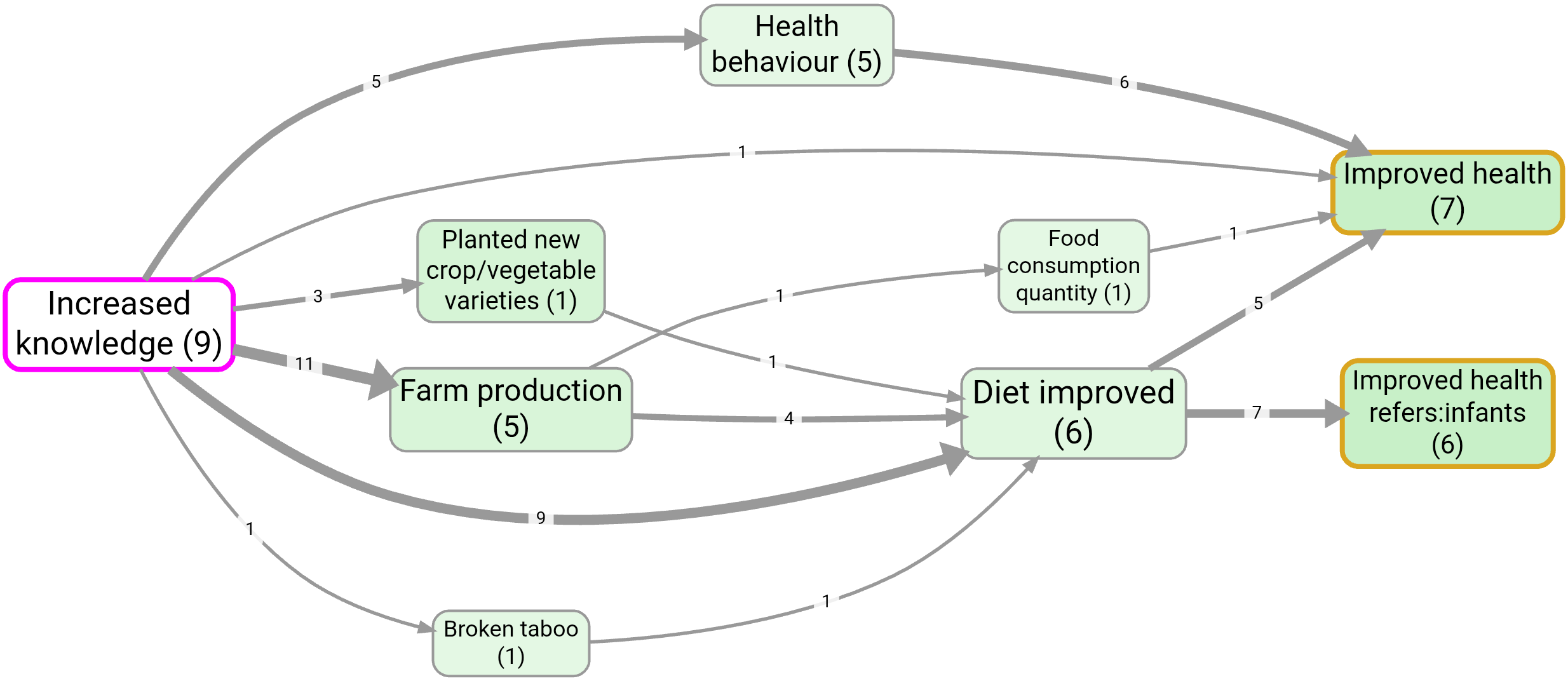
Visualise pathways.
Provide evidence for individual narratives.